

👋 Merhaba, I’m Burak. Each week, I share lessons from 26+ years of building, investing in, and mentoring startups across emerging markets, from the early internet days to today’s AI revolution. 🧿
The startup world that built most hubs before 2023 is gone.
The founder changed. The company changed. The bottlenecks changed.
But most hubs, accelerators, technoparks, innovation campuses, are still built for the old model.
This is not an essay about how to build a startup. The startups have already figured it out. This is about what their shift means for the buildings, programs, and institutions designed to serve them, and why almost none of those institutions have caught up.
The Old Model
For years, the default venture-backed startup path looked familiar:
multiple co-founders, outside capital early, early hiring, a leased office in a hub, mentor meetings, board decks, and a long road to Series C.
Old hubs, centers, and accelerators were built for this founder. They offered desks, investor intros, mentor programs, and demo days.
For a while, that worked.
Now it doesn’t.
Three things changed.
1. One person can now do far more than before
AI now helps with code, research, support, marketing, content, and operations — often at a fraction of the cost, sometimes better.
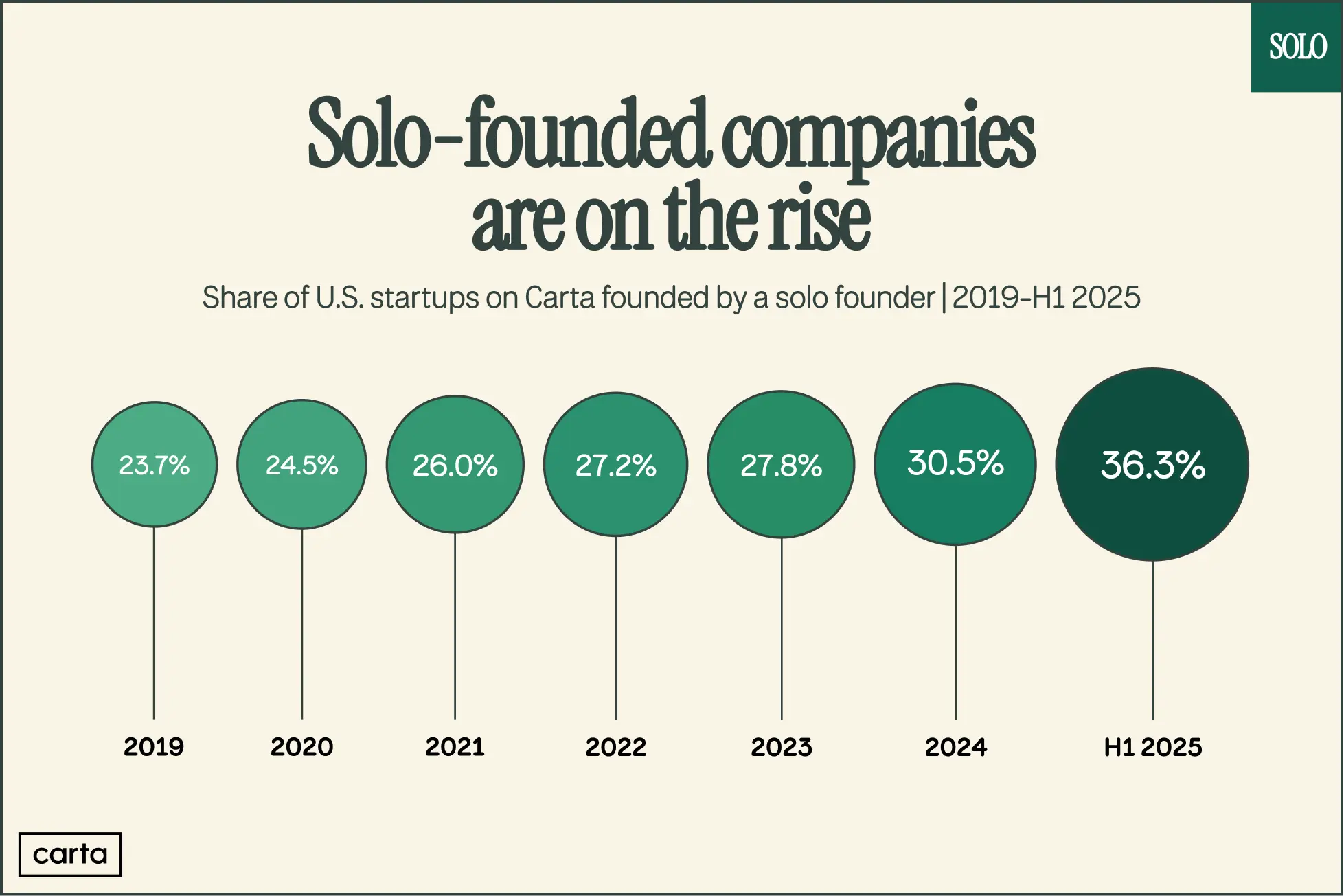
Carta’s 2025 Solo Founders Report says the share of new startups with a solo founder rose from 23.7% in 2019 to 36.3% in H1 2025.
You can see the shift in real companies.
Medvi launched in late 2024 with two people and about $20,000 in starting capital. In 2025, its first full year, it did $401M in revenue.
Lovable, the Stockholm AI app-builder, hit $100M ARR in 8 months — faster than any software company in history. By February 2026 it had crossed $400M ARR with 146 employees. Roughly $2.7M revenue per employee, nearly 10× the traditional SaaS benchmark. Customers include Klarna, Uber, HubSpot.
Base44, built by Maor Shlomo, a 31-year-old solo founder, launched in early 2025 with about $15,000 of his own money and zero outside funding. Within three weeks of launch, it hit $1M ARR. Within one month, $1.5M in revenue. Four months in, Wix acquired it for $80M upfront with earn-outs through 2029. One founder. No employees. No co-founders. Shlomo wrote almost no front-end code his AI stack did it.
None of these look like 2018 startups. None are Silicon Valley companies.
They are not isolated cases. They point to a new operating model.
2. The best opportunities moved
In the last cycle, most startup talk centered on SaaS, marketplaces, and consumer apps.
Now two areas matter more.
AI agents that replace entire workflows.
Technical company-building — robotics, biotech, materials, energy, autonomy — where AI makes small teams far more capable than before.
These founders do not just need a desk and fast Wi-Fi.
They need different infrastructure.
3. Founders are global by default
The 2026 founder does not live inside one national system.
They may incorporate in one country, bank in another, hire across borders, live somewhere else, and sell into the US.
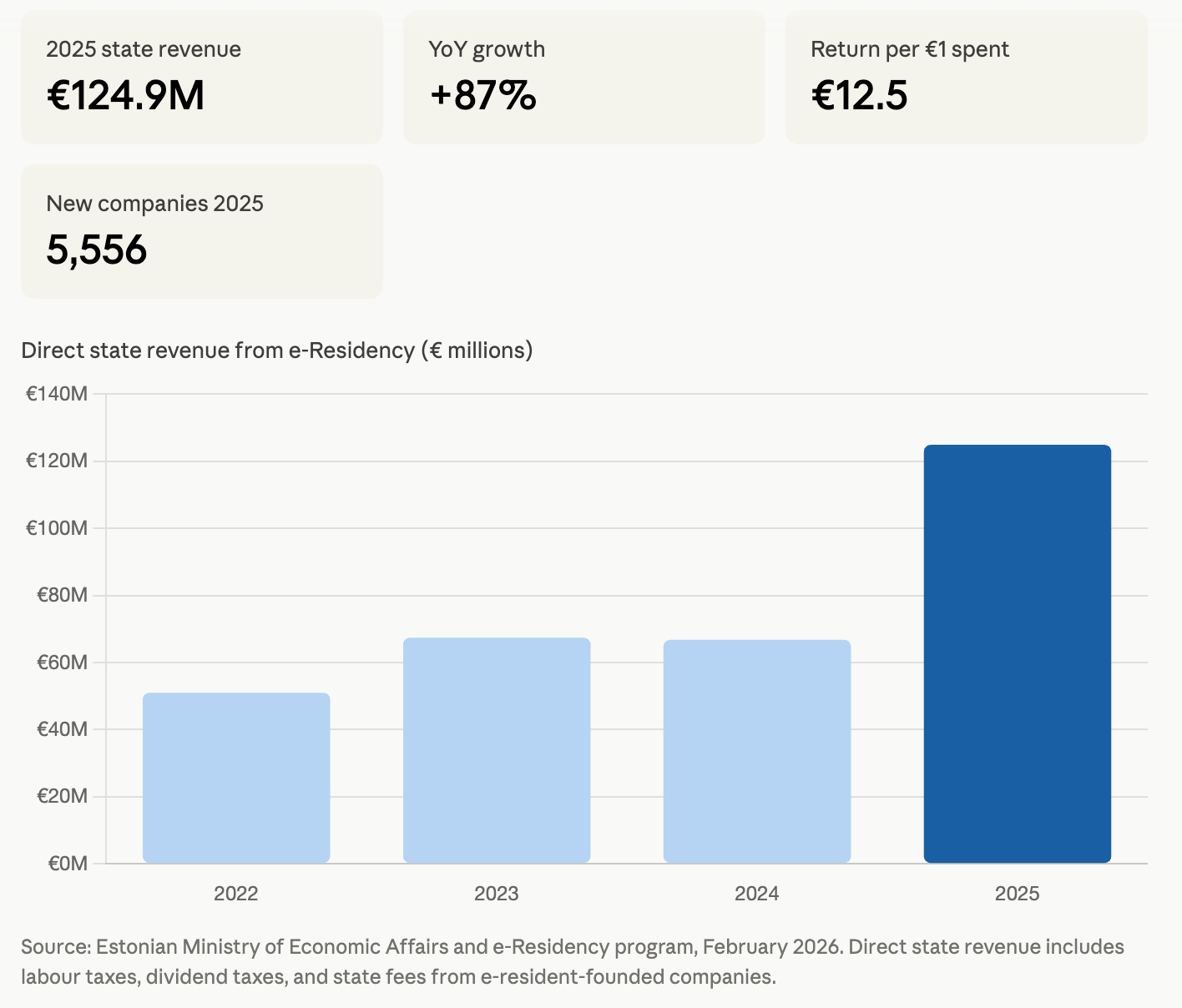
Estonia’s e-Residency program reported 5,556 new companies formed by e-residents in 2025 and €125M in direct state revenue, an 87% year-over-year jump, a 12× return on state spend.
A country of 1.3 million people is winning founders from countries 50× its size. Not because it is richer. Because it removed friction others still impose.
The hub built around geography is now weaker than the hub built around access.
The winner is not the place with the nicest building.
The winner is the hub with the best regulation, capital, compute, and network, available from anywhere.
What founders actually struggle with now
The old list was simple:
find co-founders, find office, find funding, find mentors.
That is no longer the real problem.
Regulatory friction
Founders lose months to incorporation, banking, cross-border hiring, taxes, equity, and shutting down cleanly when things fail.
None of this helps them build product.
But it still slows them down.
Compute and AI tools
Compute is now a real startup input.
Small AI-native companies spend on model access, GPU time, and APIs the way earlier startups spent on payroll and software.
Few ecosystems are built for this.
Right-sized capital
Many funds are still built for a company shape that assumed bigger teams and earlier hiring.
AI-native founders can now reach traction with much less.
That creates a mismatch. Founders either raise too much and dilute early, or raise too little and move too slowly.
Distribution, not mentorship
AI has replaced much of the generic mentor advice founders used to need, pricing, hiring, fundraising mechanics.
What AI cannot replace is access.
Founders do not need more office hours.
They need introductions to customers, regulators, and distribution partners.
A credibility layer that travels
A strong accelerator brand or seed investor still matters for one reason:
it opens doors.
Not because the advice is unique.
Because the brand lowers friction.
Founders in Istanbul, Lagos, or Karachi can build real companies and still struggle to get the first serious meeting in London or San Francisco.
That is not a talent problem. It is a trust and distribution problem.
Curated community, not crowded density
A giant building full of random startups sounds impressive.
In practice, it creates noise.
What founders want is a smaller group of the right people: high-signal peers, relevant conversations, shared problems.
What this means for hubs now
If you build a 2018-style hub in 2026, you build a museum.
The fix is not to make the building smaller.
The fix is to accept that physical space now matters in only two cases:
when founders need specialized labs or equipment they cannot afford alone,
and when the right people need to be brought together for a short, intense period.
Everything else can run digitally.
Community can be digital. Admissions can be digital. Matching can be digital. Support can be digital.
The hubs that win the next decade will not be the biggest or the prettiest.
They will be the ones that understand the founder of today, not the founder of ten years ago.
The old playbook solved old problems.
The new founder needs a new playbook.
Anyone still building for the old founder is building for nostalgia.
Why Great Startups Look Crazy
Why Rejection Is a Good Sign & How to Turn Doubt Into Your Unfair Advantage
Discover why the most successful companies started as ‘terrible’ ideas and how to leverage skepticism as your strongest signal for market potential.
Hi Burak - You capture well. As a solo founder with paying B2B customers, the only reason I am even thinking of going for pre-seed financing is for "introductions to customers, and distribution partners".
On another note, I saw a LinkedIn post about Solo founders from you. One thing I am not sure is whether it is for B2C and not for B2B. Couple reasons - a) My typical deal sizes are in 5 figure ARRs. b) Even with paying customers & design partners in single digits, I find myself quite stretched to do it alone both on engineering & business side. So not sure how one can do alone till $1 million ARR.
Just a thought...