

👋 Merhaba, I’m Burak. Each week, I share lessons from 26+ years of building, investing in, and mentoring startups across emerging markets, from the early internet days to today’s AI revolution. 🧿
In 1903, the New York Times published a confident prediction: flying machines would take somewhere between one and ten million years to develop.
69 days later, two bicycle mechanics from Ohio flew at Kitty Hawk.
The Wright Brothers had no aviation background. No PhD in aerodynamics. No government funding. They ran a bike shop. And they changed human history.
I think about this story constantly. Because I keep watching the same thing happen in startups.
In This Post
I explore why deep expertise can become a trap for founders and investors — drawing on Pattern Breakers by Mike Maples Jr., my own book Why the Eagle in the Hen House Can’t Fly, and 26 years of watching startups succeed and fail in Turkey and beyond. You’ll learn why the best founders are often outsiders, how “inflections” create billion-dollar opportunities, and what the Yemeksepeti story teaches us about ignoring the experts.
The Trap of Knowing Too Much
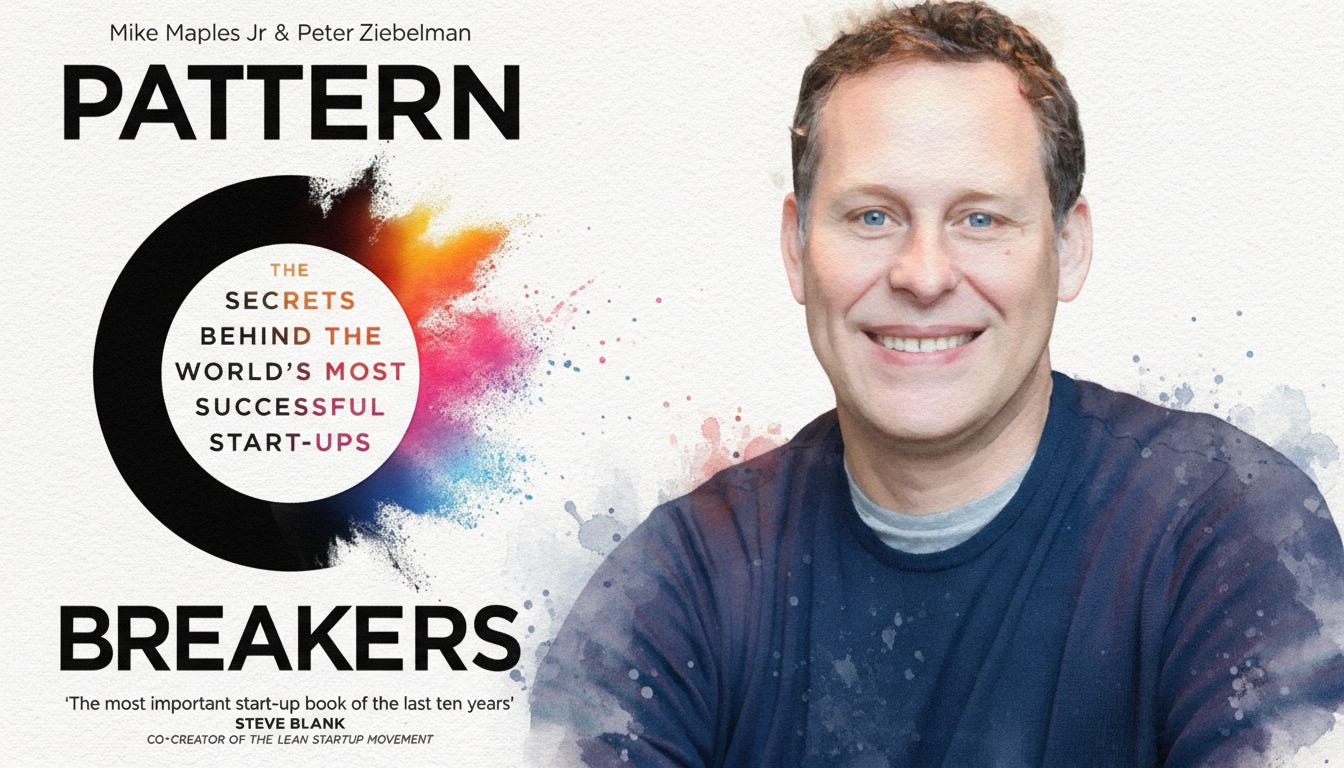
Last year I read Pattern Breakers by Mike Maples Jr. and Peter Ziebelman, and it crystallized something I’d been seeing for 26 years but couldn’t quite name. The idea is simple and uncomfortable: the more you know about how things work, the harder it becomes to imagine how they could work differently.
I’ve lived on both sides of this trap.
The more you know about how things work, the harder it becomes to imagine how they could work differently.
For seven years, I taught E-Business Strategies at Istanbul Technical University. I had frameworks. Case studies. Slides with arrows pointing at boxes. My students loved the structure. But here’s what I noticed: the students who won E-Fikrim — the startup competition I created — were never the ones with the best academic scores. They were the ones who ignored half of what I taught them and built something weird instead.
That bothered me. Until I realized it was the point.
Eagles in the Henhouse
I wrote my book Why the Eagle in the Hen House Can’t Fly in 2005. The central parable: an eagle egg falls into a henhouse. The eagle grows up surrounded by chickens. It watches them peck at the ground. It learns to walk like them. It starts to believe it can’t fly — not because it can’t, but because every expert around it says so.
Pattern Breakers tells the same story with different characters. The “experts” are VCs who pattern-match. The “chickens” are best practices. And the “henhouse” is whatever industry you think you understand.
The eagle starts to believe it can’t fly — not because it can’t, but because every expert around it says so.
When the Experts Got It Wrong
I’ve seen this kill startups firsthand.
In 2001, when the Yemeksepeti founders decided to build a food delivery platform in Turkey, every expert in the room had an opinion. Turkey wasn’t ready. The infrastructure didn’t exist. The internet penetration was too low. These weren’t random people — they were experienced operators, bankers, VCs. They knew the market.
And they were completely wrong. Yemeksepeti became one of Turkey’s largest tech exits.
The experts weren’t lying. They were pattern-matching. They looked at what existed and extrapolated. But pattern-matching only works when the future looks like the past. And for startups worth building, it never does.
Pattern-matching only works when the future looks like the past. For startups worth building, it never does.
Riding the Inflection
Maples calls this the inflection. The moment when something in the world shifts — a new technology, an economic shock, a behavioral change — and creates a gap between what people expect and what’s suddenly possible. Twitter rode the smartphone. Airbnb rode the financial crisis and the trust economy. Lyft rode GPS plus the sharing economy.
The founders who catch inflections aren’t experts. They’re outsiders who see the gap precisely because they aren’t blinded by how things used to work.
Outsiders see the gap precisely because they aren’t blinded by how things used to work.
Key Takeaways
Expertise can trap you. The more you know, the harder it is to think differently.
The future won't look like the past. Breakthroughs come from what doesn't exist yet.
Outsiders see what insiders miss. Not knowing the rules can be your biggest edge.
Look for inflections. Big shifts open gaps where new giants are born.
Don't be a chicken in the henhouse. Surround yourself with people who challenge you.

This actually quite eye opening article for me, thank you!
I am a software engineer with a decade of experience, yet I am adapting myself into age of AI era.
And this requires me to sometimes unlearn, sometimes relearn but mainly to think critically.
"But pattern-matching only works when the future looks like the past" 👍👍
Thanks for analogy approach,
I also recalled Steve Blank's reflections of "waterfall" approach era that matches what I read here. Two different parts of the world - the same aprroaches.